Mains · By James
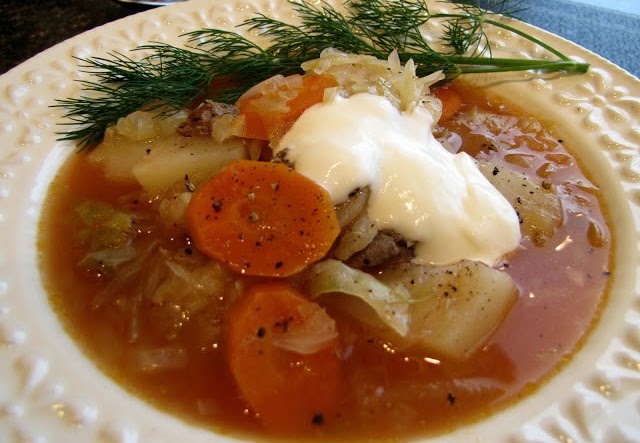
Borscht — Grandma's
Ukrainians make borscht, and Mennonites who immigrated to the Ukraine borrowed the soup, usually using cabbage as the main ingredient, but sometimes adding beets as well. This borscht recipe is based on the soup my mom cooked, for which there was no written recipe — it was simply a constant in traditional Mennonite families, made throughout the year. This soup was the ultimate comfort food when I was growing up, and it remains a family favorite. — remembering Mom, her kitchen, and cooking together.
Ingredients
- 2 lbs soup bones, beef or pork (Mom favored the pork-bone broth) with enough water to cover (3 litres), adding 4 tbsp white vinegar and 3 tbsp salt. If there is some meat on the soup-bones, don't use this boiled meat later in the soup (too mushy). Suggestion: roast or grill your bones first to create a deeper flavor — you can save the bones from any grilled bone-in steaks or pork chops (freeze them until you have enough). It's no problem to mix beef and pork bones.
- 1½ to 2 lbs beef or pork chunks (1.5 cm). If using pork, use a pork tenderloin — inexpensive and tender. Suggestion: Mom used to just chop the meat and put it straight into the broth, but for more flavor, BBQ your meat (salt/pepper and lightly oiled) until seared well but not fully cooked; once cooled, cut into 1½ cm cubes and add to finished broth.
- ½ cup extra virgin olive oil
- 1 litre of good quality beef broth to add to the bone broth you have prepared
- 4 cloves crushed garlic
- Some liquid smoke — about 10 drops
- 3 tsp freshly ground pepper
- Salt, to taste (a lot is needed — start with 3 tsp)
- 1 tsp dried crushed red chili-pepper; or ½ tsp smoked hot paprika for wonderful flavor
- 3 bay leaves (fish these out when serving the soup)
- 4 sprigs dill head, if available (also fished out when serving), and lots of chopped fresh dill frond (at least ½ cup)
- ½ tsp each of ground coriander and allspice
- 1 tsp mustard or ¼ tsp dried, ground mustard
- 4 medium carrots, small dice or sliced (about 1 to 1½ cm — small enough to cook in the same time as the potato cubes)
- 5 medium potatoes, cubed (about 1½ to 2 cm — big enough not to break down and become mushy, but not large chunks)
- 2 medium onions, diced
- 1 small head cabbage (about 10 cm diameter), cleaned and cored, quartered and then sliced into small pieces (not finely chopped). If your cabbage is larger don't try to fit the whole head in — the soup becomes too full of cabbage.
- 796 ml can diced tomatoes (organic Muir Glen fire-roasted tomatoes add deep flavor)
- ½ of 700 ml jar of Arrabbiata pasta sauce — a rich and spicy tomato sauce with no added herbs, so it will just add rich tomato and spice, enhancing the traditional spice from the dried chili and black pepper
- ¼ cup tomato paste (the best is Mutti paste from Italy)
- ½ cup, or more, of chopped parsley
- Sour cream to serve with soup — good-sized dollop in the middle of each bowl
Method
- 1
Cover soup bones with water, add vinegar and salt and simmer for at least 3 hours (longer gets you more flavor). Leave lid partly on during simmering.
- 2
Remove the bones and any residual scraps from the broth, and then add the olive oil. If your soup bones had a lot of fat on them, chill the broth for a few hours till the fat congeals on the top — scoop out the hardened fat before adding the olive oil. You do need fat for flavor, so the healthier olive oil is added to the broth (its flavor is also lovely in the tomato-rich broth).
- 3
Add diced pork/beef, beef broth, all the seasonings (garlic, smoke, all the pickling spices), the carrots and potatoes.
- 4
Simmer for 10 minutes.
- 5
Add onions, cabbage, and all the tomato stuff. Simmer for another 20–30 minutes (until vegetables are tender).
- 6
Add parsley at end. Check for salt.
- 7
Serve with sour cream.
A note from James
Traditionally 1–2 tablespoons of basic pickling spice (black peppercorns, mustard seeds, coriander seeds, dill seed, allspice berries, bay leaves, and crushed red pepper flakes) was tied in cheesecloth and added to the broth with the vegetables, then removed at the end — this recipe instead adds those spices directly in ground/crushed form (except the bay leaves and dill heads). Since the simmering and chilling of the broth takes a lot of time, make the broth one day and do the rest of the soup on the day you'll be eating it. Consensus has always been that borscht is better the second day. Drink/wine pairing: the Mennonites tended not to pair wine with their meals, but a Pinot Noir would be perfect with this rich broth.
— the end —