Mains · By James
Cajun Blackened Salmon (or Other Fish, or Chicken)
Cajun food has long intrigued me, with its roots in Canadian history. "Canadians" (hence the name "Cajuns") from Acadia in New France were pushed out by the English conquest in the late 1700s, relocating in Louisiana. What happened then was the beginning of an amazing culinary fusion of Spanish, African, Indigenous, and French-Canadian cuisine, working with Louisiana's diverse food opportunities, notably seafood and game. Louisiana in the late 1700s was a recent Spanish colony, formerly a French colony, with a large African slave culture. The indigenous groups in Louisiana were another significant part of the "Cajun" mix, with considerable trade and intermarriage resulting in a large Metis population. From the Spanish, Cajun cuisine borrowed heavily, in particular the use of paprika, black and white pepper, bell peppers, saffron and chorizo sausage. From the African cultures, there was the use of cayenne pepper which had been imported from Africa, and the classic okra gumbo and jambalaya stews. From the French, a heavy use of garlic was standard (believed to ward off the mosquitoes of the swampy coastline), as was the use of roux to thicken sauces and stews. The French love of stews was very much in evidence. Perhaps the most famous now are Etouffee shrimp stew, and African gumbo. Indigenous cultures, like the Choctaw nation, contributed in particular the triumvirate of beans, squash, and corn, one of the most influential culinary legacies in North America. The diverse, vibrant, wonderfully rich Cajun cuisine has emerged from these culinary influences, never failing to wake up the palate! The blackened salmon of this current recipe is a famous modern Cajun seafood dish, with a powerful pan-sear of vibrant spices that is a variation on the searing intensity of classic barbecuing. The BBQ tradition of the American south is key to traditional Cajun cooking, but the "blackening" of seafood using a hot cast-iron pan is a recent innovation from New Orleans (the 1970s). Sharon and I have long loved Cajun blackened fish and meat, with one of our go-to restaurant dishes being the Cajun Blackened Chicken Breast at Earl's (with warm potato salad)!
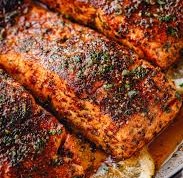
Ingredients
- 4 × 6-ounce salmon fillet portions (skinless is preferred, but skin-on works very well)
- 2 tbsp paprika (can use smoked if preferred)
- 1 tsp cayenne pepper
- 1 tsp light or dark brown sugar
- 1 tsp kosher salt
- ½ tsp white and ½ tsp black pepper
- 1 tsp onion powder
- 1 tsp garlic powder
- 1 tsp dried oregano
- 1 tsp dried thyme
- 6 tbsp butter, melted (for brushing fish)
- 4 tbsp butter, melted (for drizzling over when searing)
- 1 lemon cut into wedges
Method
- 1
In a bowl mix all spices together.
- 2
Dry off the fillet portions and place on parchment paper. Brush portions on one side with half of the butter, and then sprinkle half of the spice mix on top.
- 3
Flip over and do the same for the other side of each fillet portion.
- 4
Do this blackening outside on your BBQ (lots of smoke generated). Remove your grates and heat the BBQ to 500+ degrees.
- 5
Put a cast-iron skillet down on your flavorizer bars, and heat until very hot (drops of water dance on surface).
- 6
Place the 4 seasoned portions into the hot skillet, and pour 1 tablespoon of butter over each fillet portion. Sear this first side for 3 minutes roughly, until gently blackened (not burned), then flip and sear the other side for about the same time. You want the inside to still be moist and slightly pink.
- 7
Allow to sit for several minutes before serving with a lemon wedge to squeeze over the top.
A note from James
This same rub and technique can be used for any boneless fish or chicken (if using breasts, be sure they have been flattened a bit so they will cook through during the brief searing). Drink/wine pairing: a pinot noir, zinfandel, or a grenache/syrah blend from the Rhone area of southern France.
— the end —