Mains · By James
Gnocchi
Sharon loves to tell stories of how I tried and eventually gave up making gnocchi, back in the late 80s; they were a bit like rubber erasers. The quest went dormant for many years, until Sharon and I had a chance in 2018 to take a cooking class with a notable Italian chef, Carlo Zarri (he had been chef for the Italian Olympic team, and is known for his truffle recipes — we tasted our first white truffles shaved fresh onto his angel-hair pasta). We were staying at his small hotel close to Alba (by Genoa), and he agreed to spend a morning cooking with us. When he asked what we wanted to make, of course gnocchi headed the list. This is his recipe; they are light pillows with just a bit of chew — perfect consistency! When we got back to Canada, Sharon and I hosted the library staff in an evening of Italian cooking (using the Medicine Hat High School kitchens), where we made these gnocchi with various sauces. We still hear from library staff about that special night.
Ingredients
Gnocchi
- 550 g (~3 cups) cooked and riced Yukon Gold potatoes: use 3–4 large potatoes; peel, cut into chunks, and steam (don't boil) until just fork tender, not mushy. Let the chunks cool a bit before ricing them — can still be warm (potato ricer).
- 1 large egg — whisked (don't be tempted to use more egg)
- ¾ tsp sea salt
- 225 g (~1½ cups) all purpose unbleached flour (you may need some additional flour for hand-rolling the dough on the counter). Tip: fluff your flour by using a spoon to lift and stir it before filling the flour bowl spoon by spoon — this lighter, sifted flour helps to create more airy gnocchi.
Sauce (one option among many, but a preferred one of Carlo Zarri's; a classic option is a rich ragu)
- ½ of a medium purple onion, finely diced
- 3 good sized cloves of garlic
- ¼ cup extra virgin olive oil
- ½ of 796 ml can diced organic tomatoes (fire-roasted tomatoes are amazing); if you prefer your sauce saucier, then add more
- 2 tbsp tomato paste
- 15 cherry tomatoes — cut in half
- 1 cup finely grated Parmigiano Reggiano, and some extra shaved to top the dish
- 20 leaves fresh basil — finely sliced (put all leaves together, then press down on them while cutting thin "julienne" slices)
- Sea salt to taste
- ½ tsp anchovy paste
Method
- 1
Rice the warm potatoes onto your counter. Add the beaten egg and sea salt to the riced potatoes and mix around with a fork, or your fingers.
- 2
Then, spread the flour on top of the potato/egg mixture, bit by bit, and bring together with your hands, just until the elements are combined. Kneading too much will make your dough tough (exercising the gluten). The dough needs to feel soft, not elastic. During this process you may need to add a bit more flour so the dough is not sticking to your counter work surface (but be careful, and try to bring it together without additional flour).
- 3
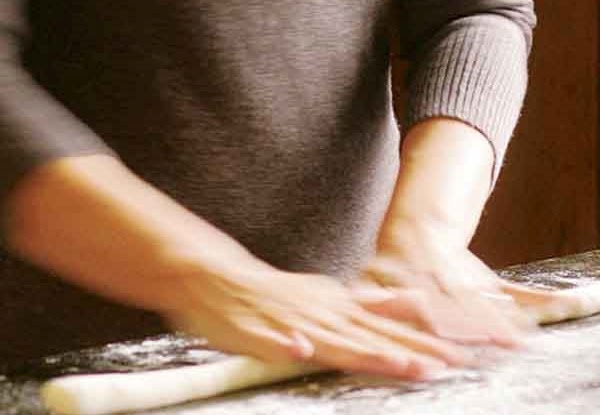
As soon as the dough is ready, shape it into a big log, then divide the log into 6 equal portions on the counter-top. Roll each of these pieces out on the counter with your hand, making a thin tube of about 1.5 cm in diameter. Have your counter scraped clean of dried dough and then lightly floured (too much flour makes the dough tube slide on the counter rather than rolling back and forth, and this makes it hard to roll into a thin tube).
- 4
Cut each long tube into little "pillows." Carlo said that bigger gnocchi don't grab as much sauce as smaller gnocchi, so he cuts his in roughly 1 cm wide pillows. (He also said that most gnocchi made at home are not shaped with fork tines to create the classic ribbing — doing this is time consuming.)
- 5
As you cut the gnocchi tubes into small pieces, put each piece into a bit of flour (have some flour beside where you are cutting) so they don't stick to other gnocchi, and then put onto parchment covered baking sheets — make sure they don't touch. You will need two baking sheets to spread out all the gnocchi.
- 6
Now make your sauce: sauté the onion and garlic a couple of minutes in the olive oil. Add the diced organic tomatoes. Then leave the sauce until the gnocchi have been added.
- 7
Adding cooked gnocchi: boil 3 litres of heavily salted water (2 tbsp salt or more). Add the gnocchi to the water at a leisurely pace. There is no need to hurry, since when the gnocchi bob to the top of the water you skim them off with a big slotted spoon (shaking out the water) and then drop them into the waiting sauce (which is not being heated at this point). Keep leisurely adding gnocchi to the water and fishing out the ones that have bobbed to the top. Note: they will bob to the top quite quickly — as little as 1–2 minutes — and can be fished out right away.
- 8
Once all the gnocchi have been cooked and put into the sauce, bring the sauce back to a simmer and add the parmesan. Stir in until blended, then add the fresh tomato and basil, stirring them in and just heating them briefly (a minute or two). You don't want your tomato skins to peel off into the sauce. Season to taste with salt (needs a fair amount — at least 2 tsp of sea salt).
- 9
Serve with shavings of Parmigiano Reggiano!
A note from James
It's important to use Yukon Gold, since they have medium starch (don't get glumpy), and low moisture. This, combined with steaming rather than boiling, means less flour is needed to bring them together into a dough, which means less gluten development that leads to chewy gnocchi. Yukon Gold are also known for a richer, almost buttery flavor. This proportion of riced potato to flour creates roughly a 76% potato blend, very close to the 80% in premium commercial gnocchi from Italy — a pillowy dumpling, so soft, and rich in potato flavor! Drink/wine pairing: a Sangiovese (Chianti) or a Pinot Noir with this tomato sauce; if pairing with a ragu, any robust red — Rioja, reserve Chianti, Zinfandel, Cabernet Sauvignon, or Shiraz; with a cream sauce, a Chardonnay will be perfect.
— the end —