Mains · By James
Green Curry (Thai)
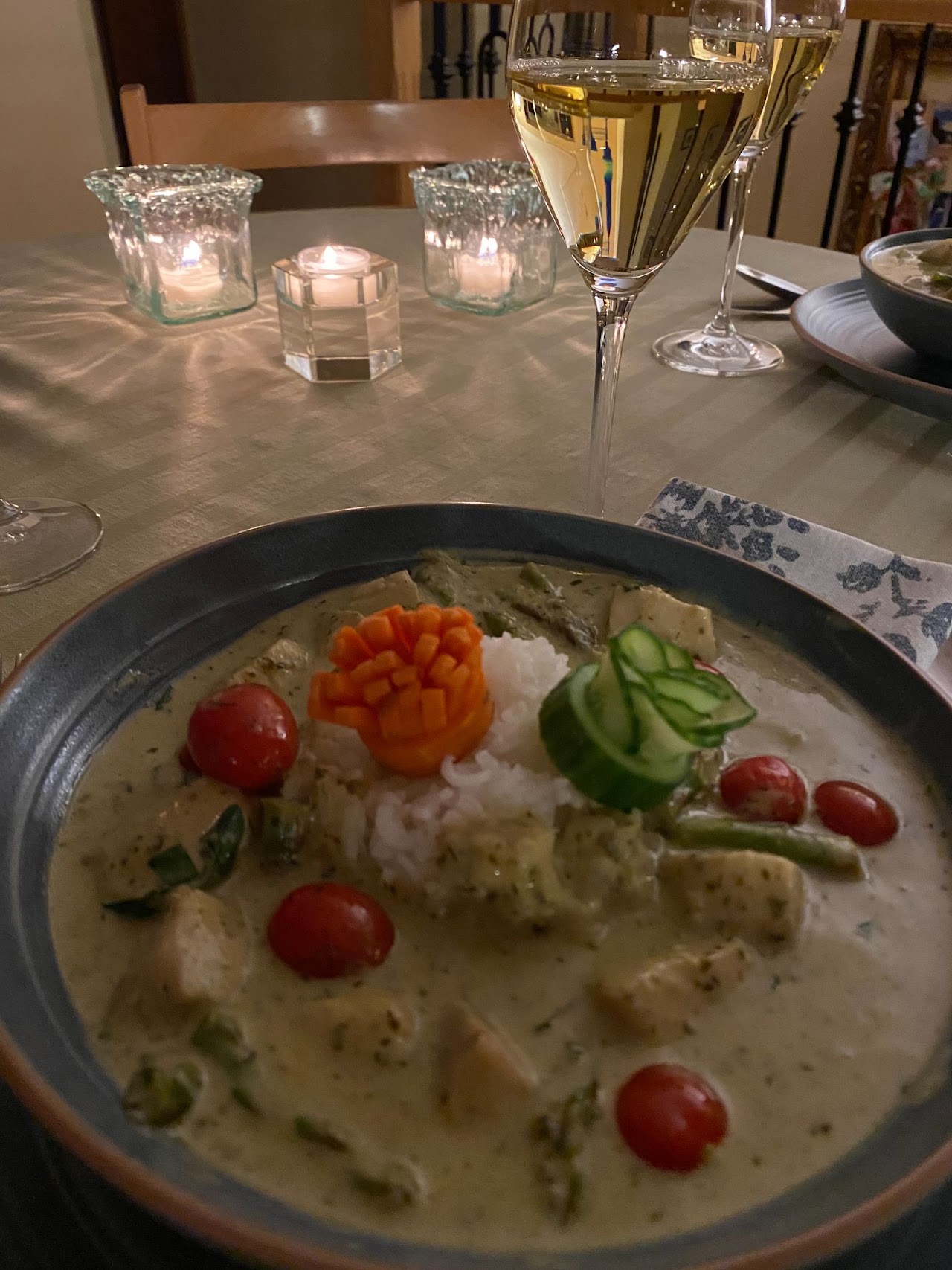
Bill and Joanne have been the catalyst to many culinary adventures for our family, having lived all over the world. Their time in Thailand was an opportunity to engage our love of Thai food. Joanne signed me up for a cooking class at the Blue Elephant cooking school in Bangkok when Sharon, Jocelyn, and I visited in 2009. They used the "Royal Thai" approach to cooking, which is less rustic (for example, all bones and pits are removed), and uses the best traditional ingredients. We cooked all day and then fed our families a multi-course feast at the end of the day. One of the dishes we learned was the classic green curry. Everything was prepared in the traditional way, using mortar and pestle to make the fresh spice base and to pulverize the coriander root and garlic. This recipe is based on what we learned, but uses the convenience of a jarred green curry spice blend. And, since coriander root is rarely available in our grocery stores and is a key ingredient in the flavor profile, our Bangkok teachers suggested that we pulverize a bunch of coriander stems with the leaves (cilantro). They also said that if the traditional small Thai eggplants were not available in Canada, sub in cherry tomatoes (a typical ingredient in Thai red curry with duck), which is what we've done. Another addition we've made is to include asparagus pieces, an innovation Sharon suggested — the green fits, and it's a wonderful textural piece in the curry sauce. Probably one of the most memorable connections we have to the green curry of Thailand was seeing woven baskets on the docks beside the river which we were told was "fish sauce" in the making. Being a key ingredient in many Thai dishes, I was curious. Overcoming the overwhelming smell surrounding the baskets, I discovered that they were stuffed with small fish. Apparently, the process involves fish being layered with salt and left to ferment for a long, long time (months) in the hot Thai sun before being filtered and bottled! There's a reason you get serious umami flavor in this sauce! Sharon reminded me of how many people we have served this to over the years, and of the unfailing rave reviews. Even those who have a distaste for cilantro have been won over by the incredible combination of flavors in this dish. The first time I made this for my brother Phil, he was horrified by the huge bunch of cilantro I pulled out and chopped — he said "I don't like cilantro — can taste the smallest piece!" I confidently suggested that he could give me his final verdict after we had eaten. He had seconds, and then humbly asked me for the recipe! The Thai carved vegetables you see on top of the dish are a wonderful art form with many layers of complexity. Our Thai instructors taught us some of the basic skills to beautify our final dishes.
Ingredients
- 10–12 chicken thighs (deboned) — or 3 large chicken breasts (deboned). Salt each piece and then lightly grill — important to leave underdone. Once cooled dice into bite-sized pieces. An exotic option is to use sea scallops instead (about 454 g) — these are not cooked ahead of time; add just a couple of minutes before serving the curry.
- 1 jar (270 ml) Blue Dragon green curry paste (or the Thai Kitchen Green Curry paste in the small 112 g jar — it is much more concentrated, so the small jar equals the bigger Blue Dragon jar)
- 8 cloves garlic, crushed
- 7+ tbsp grated ginger
- 2 tsp ground coriander
- 2 tsp ground cumin
- 3 tbsp olive oil
- 1 big bunch cilantro, very finely chopped (no need to strip the leaves from stalks — Thai cooks use the stalks and roots, excellent flavor). It's important to get this so finely chopped that it's mushy/pasty — we want it to blend into the sauce, not stick out in big pieces. Save about 15 leaves to use as top garnish.
- 2 cans coconut milk (get "Aroy-D Coconut Milk" — the best)
- 1½ cups chicken broth
- 1 big lime (or 2 small) — zest it completely first, then juice it
- 2 full lemongrass spears, finely sliced (just slice up the white and the pale tender green of the stalk — get rid of the tough stalk at the top, and strip off any tough outer leaves). Once sliced into little rings, put in a glass container and just cover with 1 cup of the chicken broth. Heat in microwave until simmering. Allow to steep for at least 15 minutes before adding the infused broth to the curry (sift through a sieve).
- 2–3 cups asparagus pieces (can add any veg, or combination, that you would like — snow peas are great)
- 5 tbsp fish sauce
- 2 tbsp brown sugar
- 15 cherry/grape tomatoes — left whole
- 20 or so Thai or regular basil leaves, whole or julienned
- 2 green or red chilies (larger, like the Jalapeño or Anaheim), thinly sliced for garnish
- 2 cups Jasmine rice (rinse well before cooking)
Method
- 1
Grill thighs or chicken breast until just partly done (4 minutes per side is lots). Let rest after grilling, and cut into cubes just before adding to curry sauce. It's very important for breast to keep it undercooked, so that when you add it to the curry at the end it will stay moist, and not become chewy. If using sea scallops, no pre-cooking is required.
- 2
After grilling, get your jasmine rice going (takes about 9–10 minutes, and then let stand for at least 5 minutes — just leave the lid on until your curry is ready).
- 3
Make curry sauce base — very finely chop cilantro and add to big non-stick fry pan or wok. Then add garlic, ginger, green curry paste, coriander and cumin, and sauté with 3 tablespoons olive oil for a few minutes. (The green curry paste has everything in it, but is tame, and so the added ingredients give it a boost.)
- 4
Add coconut milk (slowly at first, stirring to emulsify). Then, add the chicken broth, and your chopped veg.
- 5
While simmering the above, grate off all the lime zest and add. Then juice the lime and add. (This is in place of the Kaffir lime leaves normally used — we just can't get them here. If you can get them, put in 4 or 5 — these then need to be fished out like bay leaves before serving.)
- 6
Add the hot lemongrass water to the sauce, as well as the fish sauce and brown sugar. (Thai cooks put the lemongrass right into the curry, but you can't chew it — by just using lemongrass broth you get the wonderful lemony flavor without the inedible chunks.)
- 7
Cube the partly cooked chicken (with any juices), and add to the sauce. Also, add the cherry/grape tomatoes. Simmer for about 4 minutes more to finish the chicken and heat the tomatoes through. If using scallops, add them in the last 2 minutes of this simmering.
- 8
Just before serving, add in about 10–15 of the whole or julienned basil leaves (this keeps their flavor and color vibrant). Save a few leaves to garnish the top of each bowl.
- 9
Create mounds of Jasmine rice in the center of bowls (use wet fingers to shape the sticky rice into tall mounds). Serve the curry around the edges of the rice mounds (mounds should stick up above the curry), and garnish the top of the rice mound with thin slices of the red/green chilies, the remaining basil and cilantro leaves.
A note from James
Adding Thai carved vegetables on top of the fairly plain looking green curry is quite easy — a number of great tutorials online to get you going! Drink/wine pairing: a Gewurztraminer or a semi-dry Riesling.
— the end —