Mains · By James
Osso Bucco with Milanese Risotto (and Gremolata)
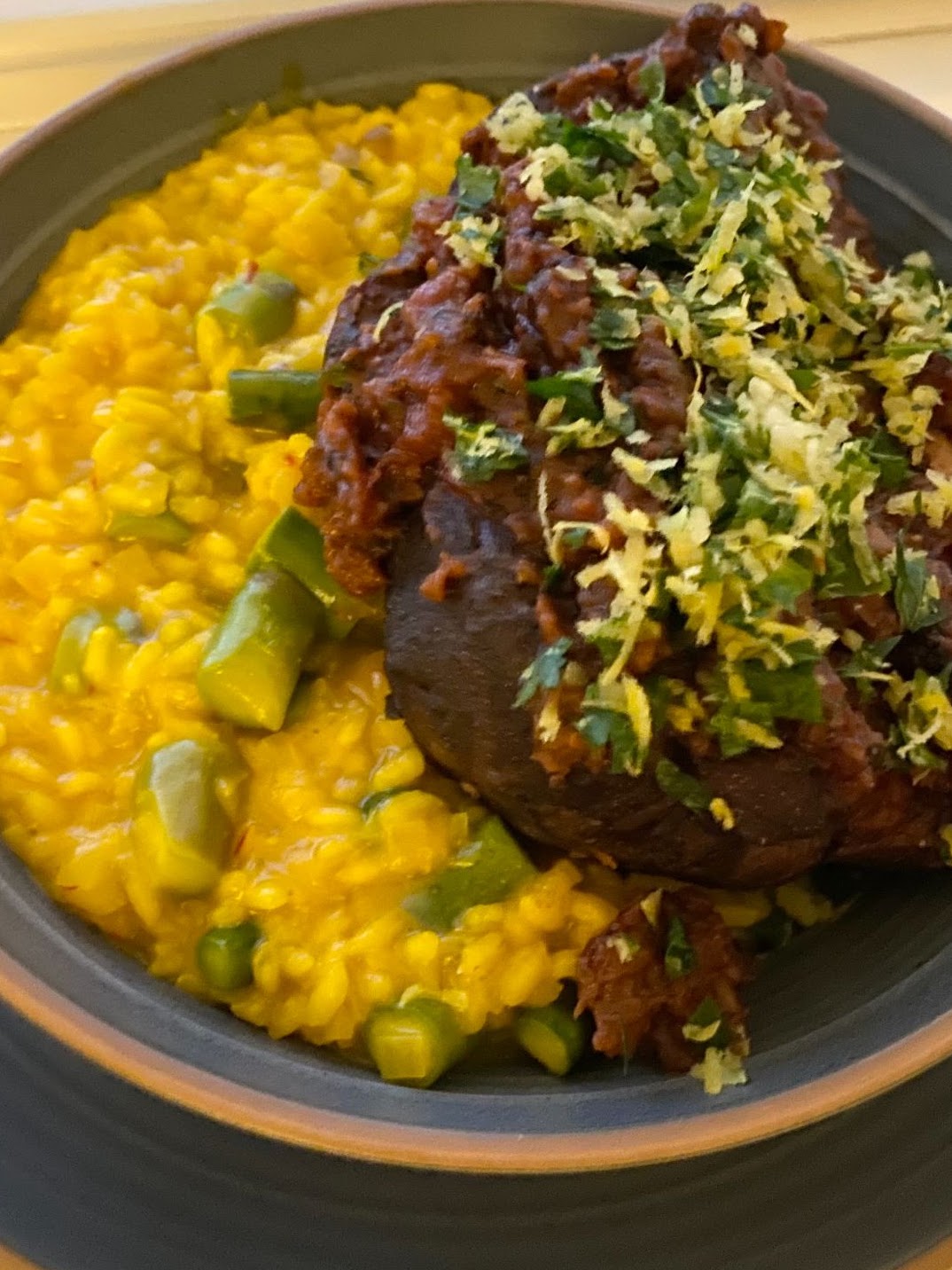
Osso bucco is the stuff of legend in the Mediterranean, enshrined in many novels with loving descriptions, talked about in Italy in reverential tones. Frequently, reference will be made to the place where osso bucco was born and where it's iconic: Milan. An amazing saffron risotto has become the hallmark of this signature Milanese dish. Our family loves osso bucco, with Joc particularly enamored of it. We've had it here and there in our travels, with Joc having the Greek version of it in 2005 whenever it appeared on a menu in Greece. When Sharon and I finally went to northern Italy in 2018, we had our opportunity in Milan for the Milanese osso bucco! A particular restaurant had been recommended as having the best ever, and it was amazing, made with succulent veal shanks that were as big as our heads! We came home and immediately tried to reproduce that experience, with beef rather than veal. This recipe is an excellent version of that wonderful Milanese dish. Although, dare we say it, Sharon is sure that our risotto is better (I use lots of saffron and cheese). Perhaps the asparagus we add puts it over the top, with the fresh green pieces punctuating the rich unctuousness of the rice.
Ingredients
Osso Bucco
- 4 slices cross-cut beef shank — often called an "osso bucco" cut (about 1½ inches thick)
- 1 medium onion, finely chopped
- 1 large carrot, finely chopped
- 1–2 celery stalk(s), finely chopped
- 4 big cloves garlic, chopped
- 1 cup dry red wine
- 796 ml can diced tomatoes in juice
- 1½ cups good-quality beef stock
- 2 tbsp fresh thyme, or 2 tsp dried
- 1 tbsp fresh rosemary, finely chopped, or 1 tsp dried
- Flour
- Extra virgin olive oil
- Salt and pepper to taste
Gremolata
- ½ cup finely minced parsley
- 2 minced garlic cloves
- A pinch of salt
- Grated zest of one washed lemon and a bit of the lemon juice (1 tsp)
Milanese Risotto (with saffron)
- 1½ cups rice for risotto (arborio)
- 5 cups chicken stock
- 2 large pinches of saffron (about a teaspoon)
- 3 tbsp extra-virgin olive oil
- ¾ cup minced white onion
- ¾ cup dry white wine
- 1½ cups asparagus (cut into short 2 cm lengths)
- 2–3 tbsp unsalted butter
- ¾ cup finely grated Parmigiano-Reggiano cheese
Osso Bucco
- 1
Dredge each shank in flour (shake off excess), and then season each side with salt and pepper (handle with forks, not your fingers, to save the flour coating).
- 2
Note: each shank will have an outer covering of elastin (called silverskin), which separates muscle groups. Cut through this silverskin in several spots around each shank to avoid having it tighten up as you sear the shank, which pushes the inner muscle meat up and out — since this results in the shank no longer being flat, your attempt to get an even, rich browning will be frustrated.
- 3
Place onion, carrot, celery and garlic in a food processor and pulse until finely minced, but not puréed.
- 4
Coat a big braising pan or a Dutch oven with olive oil and place over medium-high heat. Sear shanks until deeply browned on both sides. Remove to a plate. Add a little more oil and add minced vegetables. Cook until vegetables are browned, 7 minutes.
- 5
Add wine to vegetables in the pan, scraping up browned bits as the wine heats up. Add tomatoes, beef stock, thyme, rosemary, and shanks. Bring to a boil, then cover and reduce heat to lowest setting.
- 6
Check shanks after an hour, and then every half hour (add more stock if liquid cooks down too far — you don't want it too sludgy, because then it starts to burn). After two hours they should be done depending on how thick; they're done when the meat easily pulls away with a fork, and the sauce has mostly reduced to a viscous consistency.
Milanese Risotto
- 1
When the shanks are 30 minutes from being done, start your risotto. Begin by heating your chicken stock, then ladle a ¼ cup of it into a water glass into which you have crumbled the saffron (be sure it's crumbled very finely).
- 2
Sauté the diced onion in olive oil, add the arborio rice and stir-fry for a minute or two. Lower heat to medium-low and add the white wine, stirring around until the wine is mostly absorbed. Then begin adding your hot chicken stock, a ladle or two at a time, stirring constantly.
- 3
When you are 20 minutes into the process add your bit of stock with the saffron (we don't want it to lose pungency by cooking too long). At this point add in your diced up asparagus (it will be perfectly cooked by the end of the risotto process). Continue adding rest of stock until desired consistency is reached (a bit of chew in the rice).
- 4
Finish the risotto by turning off the heat and adding in your parma cheese and butter — stir to combine, and then serve it immediately.
Serving
- 1
This dish is traditionally served in large, shallow pasta bowls/dishes, with the risotto on one side.
- 2
Divide shanks among the dishes, with the risotto on the side, and then stir one tablespoon of gremolata into the sauce remaining in the pan. Then, spoon the sauce over the shanks on your plates. Leave the risotto without sauce. Sprinkle remaining gremolata over each shank, and serve.
A note from James
Drink/wine pairing: a rich Valpolicella Ripasso (the Valpolicella region is right beside Milan — perfect pairing), Sangiovese from Tuscany (like a Chianti Riserva), or Rioja.
— the end —