Mains · By James
Paella
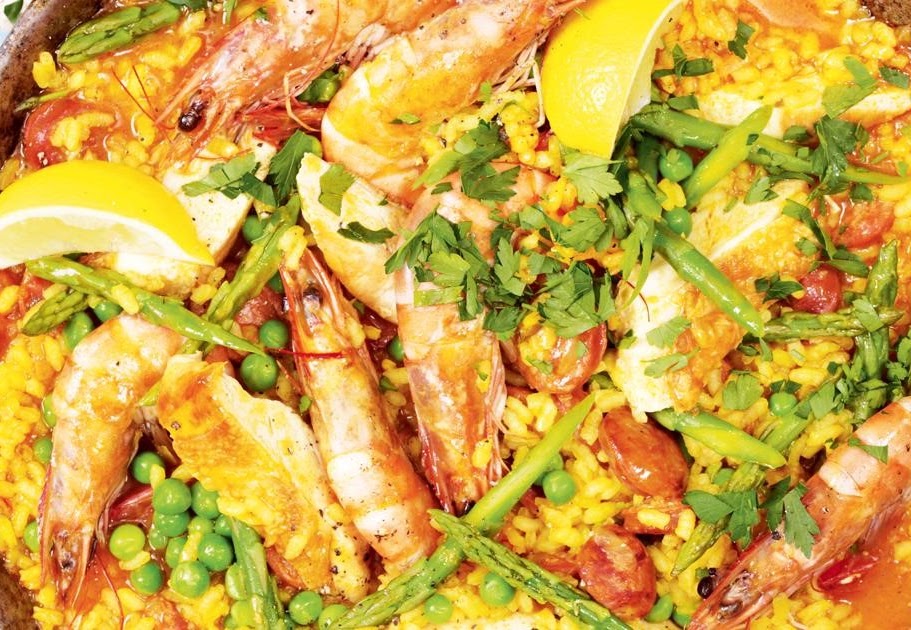
This recipe was inspired by Adelina, who was our host at a Cava vineyard close to St. Sadourni d'Anoia, Spain. We stayed with Adelina's wonderful family (husband Santiago, and daughter Anna) for 2 weeks in the fall of 2016 in their 200 year old stone farmhouse, with our whole family joining us there. This was the first time we met our dear Cindy, in the airport in Barcelona, as she and Cam appeared in the arrival area. It was during this trip together that the infamous wasp sting incident happened (ask Cindy), Joc decided to be the first to blacken her teeth with a squid ink pasta, and Cam cooked amazing fish over an improvised outdoor charcoal fire (not an easy task). Adelina offered to have a paella cooking class with us, opening the mysteries of paella in the original Valencian style (a meat-focused paella originating by the rice fields some distance from the coast, where rabbit/chicken was a common meat for field hands). This recipe adds some seafood to Adelina's meat-focused recipe, a common practice in Spain, known as paella mixta. The one thing that most Spanish will likely not add is the chorizo, but many great chefs (including Jamie Oliver) do add it, and we love the flavor it adds. She emphasized that paella is all about creating flavor in the rice, which is the star of the show! Paella creates a sofrito (flavor base) from a combination of tomato paste and grated fresh tomato as well as grated onion and crushed garlic. This is cooked for a while to caramelize the sugars so it takes on a rich flavor. At the end it is covered for a short time with a kitchen towel (in her case one that was used only for her paella, and had a reverential place in the process). Traditionally, paella is a communal dish eaten from the big paellera (pan) directly, with each person having a big spoon, the focus being to scrape up all the wonderful crispy rice on the bottom of the pan.
Ingredients
- 2 cups Bomba rice (¼+ cup uncooked rice per person)
- 6 cups chicken stock, infused with 1–2 tsp anchovy paste, several sprigs of fresh rosemary, at least 6 sprigs of fresh thyme, and a liberal pinch of saffron threads (roughly 1 teaspoon). Bomba rice has a ratio of 3 cups liquid to 1 cup rice. If your chicken stock is unsalted, add 1½ tsp sea salt to this amount of broth.
- 1 large red onion, pulverized in a blender (you want it almost pureed)
- 8–10 cocktail tomatoes (or 15–20 grape tomatoes), pulverized in a blender (pureed)
- 3–4 tbsp Mutti tomato paste
- 6 large garlic cloves, crushed
- 3 tbsp + 2 tbsp extra virgin olive oil
- 1 large red bell pepper, diced (1 cm dice)
- 30 asparagus pieces — tips and stalk cut into 2–3 cm pieces (we prefer this to the green beans that have become common in Spanish paella). If you like peas, add ½ cup frozen peas as well.
- 6 deboned chicken thighs, cut into bite-sized chunks
- 3 or 4 small links of fresh/soft — not air-dried — chorizo (squeeze out of the casing)
- 20 large raw shrimp (tail on) — salted
- 1 tbsp smoked paprika
- 2 big pinches saffron, one for the broth, and one to add directly to the rice (if you can afford it, use more saffron — it transforms the dish)
- 1 tsp sea salt
- ½ tsp cayenne pepper
- 1 big lemon, cut in thin wedges to spread around edge of paella
Method
- 1
Have all your ingredients prepared/measured before you start cooking.
- 2
Get your chicken broth ready by adding anchovy paste, rosemary, thyme, and a big pinch of saffron — about 1 teaspoon of loose threads (crush it first using a spoon in a glass). Heat it up with these herbs for at least 10 minutes and then strain them out or just fish out the herb stalks. Keep your stock hot as you do the cooking below.
- 3
Cut up the chicken, and put to the side.
- 4
Coat the bottom of your paella pan with 3 tbsp olive oil.
- 5
Pull the casing off chorizo and crumble it into small chunks. Stir-fry for several minutes in the olive oil to release the flavor and color into the oil.
- 6
Add chicken pieces, and stir-fry for a few minutes in the oil to infuse the oil with some chicken flavor — the pieces should be just cooked (still moist). Scoop out chicken/chorizo and set aside.
- 7
In the oil remaining in the pan (add a bit more if needed), brown garlic, grated onion, grated tomato and tomato paste slowly, on low-medium heat, for 15 minutes. Stir often. This medley is the "sofrito" flavor base. Add a little water to the parts of the pan that are turning dark brown, and then scrape with a wooden implement to deglaze — this browned residue is what gives deep flavor to the sofrito.
- 8
When the sofrito is almost done, turn on your BBQ to get it heated up (take off the top grates first).
- 9
Scrape the sofrito together and set aside. Add rice to pan and the additional 2 tbsp of olive oil, stir frying on high heat — about 3 minutes. This toasts the rice a bit (adding flavor) and causes the outer shell of the rice to be more resilient so the paella rice doesn't become mushy as it cooks.
- 10
Add to the toasted rice your paprika, cayenne, sea salt, bell pepper and the second big pinch of saffron (crush the threads first to release the tasty oils).
- 11
Then add back into the pan your sofrito mixture, the chorizo and chicken, and stir fry it all with rice for another minute or two.
- 12
Take your full paella pan now to the heated BBQ, turn down heat, and place pan on the flavorizer bars down by the flames.
- 13
Once the pan is situated, add all 6 cups of the chicken stock (pour it through a strainer to remove herb stalks). If stock has been kept warm, it will begin bubbling almost immediately.
- 14
This is where paella is made or broken. Stir it to spread around the mixture in the stock, evenly distributing the rice and meats. After this you must let the paella SIT! If you try to stir it after this you don't allow the socarrat to develop.
- 15
Turn heat back up to high and let cook for 10 minutes, until rice begins to poke out of the broth. Close BBQ lid during cooking.
- 16
Then, using oven mitts, turn pan 180 degrees, reduce heat a bit to medium-high and continue to cook for another 5 minutes.
- 17
Now lay the asparagus pieces (and peas, if using) and the uncooked shrimp all over the top of the paella and push them down into the rice a bit. Close the lid again and continue to cook on medium-high heat for 5 more minutes.
- 18
Since all the liquid will now be absorbed into the rice, the caramelizing and Maillard-effect can begin on the bottom layer of rice. You will hear a sizzle in the pan as the rice crisps up and starts to brown — this crispy rice is the prized "socarrat." You can turn the pan once more during this last 5 minutes.
- 19
At the 20 minute point, turn off the grill heat and remove the pan. Cover the paella with a cotton kitchen towel to keep it warm while allowing the flavors to meld — keep covered 10 minutes before serving (the towel won't trap moisture that could soften the socarrat).
- 20
Then uncover and garnish all around the edge with lemon wedges (these need to be squeezed liberally all over each serving of paella, to get bright acidity combining with the deep savory flavors).
A note from James
If making the whole recipe, use a 15 inch paella pan (so the rice layer stays around 2 cm). Use a gas grill to cook it — far better distributed heat over the whole pan for better browning. Take off the grills and put the paella pan right down on the flavorizer bars so it's closer to the heat. To make it more authentic, put some small chunks of wood on the sides and get them smoking before you put on the pan (in Spain the paella is cooked over wood coals). Drink/wine pairing: a good Rioja (our family favorite is the Beronia Reserva — decanted for at least an hour). Alternately, a Chianti. Big red wines don't taste good with shrimp, so just enjoy shrimp bites without a sip of wine.
— the end —