Appetizers · By Sharon
Sicilian Caponata
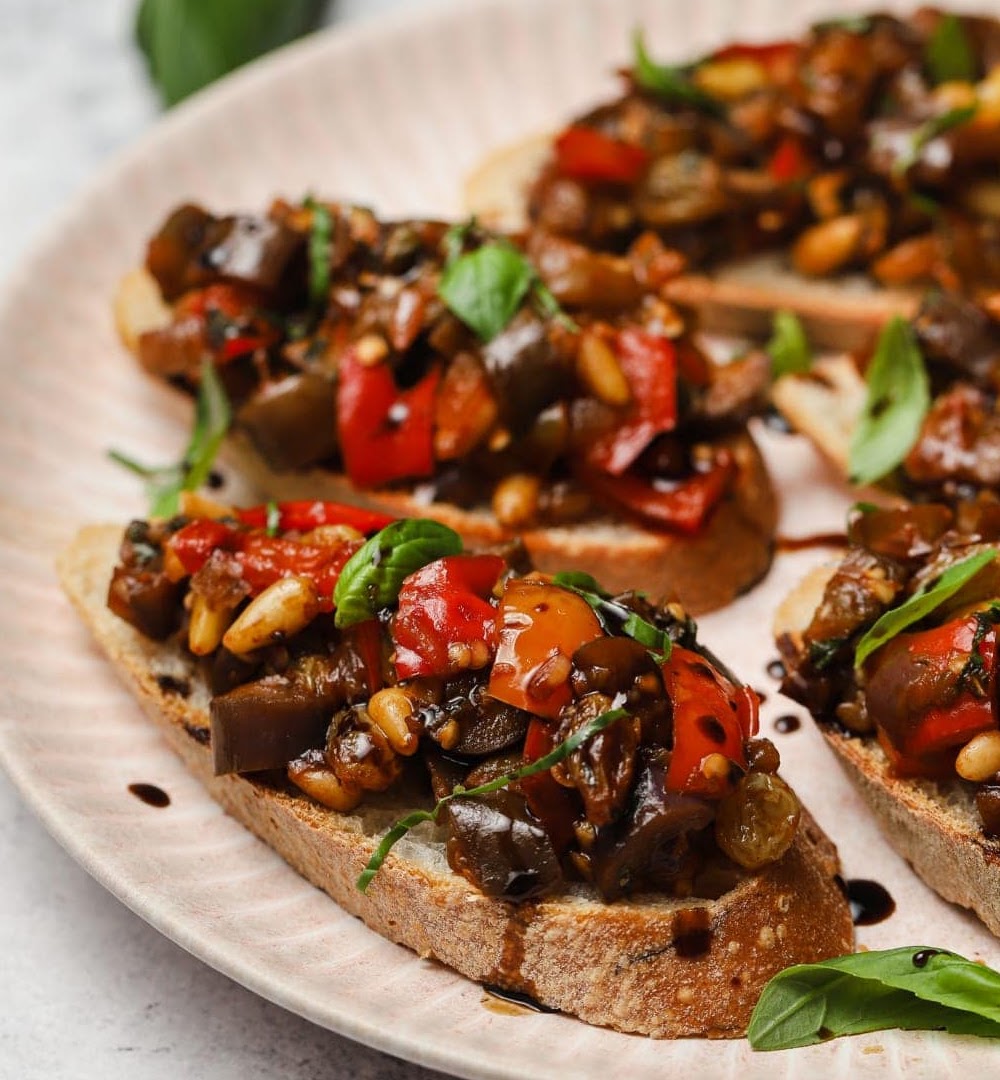
Our travels in Italy have enhanced our love of vibrant, fresh Mediterranean flavors. In Sicily, in the spring of 2022, we discovered another classic dish from this region. Caponata is very Sicilian, considered a comfort food everywhere on the island. It's characterized by the agro-dolce — sweet-sour — flavors so loved in Sicily (a legacy of north-African influences, like the Moroccan tagine), with sweet raisins and aged balsamic, briny green olives and capers, and lots of the resiny pine nuts harvested throughout the island. Our first experience with caponata was on a trip to an olive farm in the Castelvetrano area, southwest of Palermo. Since Covid travel restrictions in Italy were fully lifting in the months preceding our trip, we were some of the first travellers to Sicily in over two years, and we were warmly welcomed. We arranged an agri-tourism experience to this Castelvetrano farm, and when we arrived found that we were their very first travellers since 2019 — they were so welcoming and hearty. We ended up spending the entire afternoon with them, after sharing a late lunch feast of at least 10 different appetizer dishes. Caponata was one of them, and we raved about it then and for months after. The pine nuts are a key piece in the dish, and the long slim Mediterranean varieties are recommended, rather than the smaller oval Chinese varieties (less flavorful, and there were some issues with poor quality nuts being used). Lebanese pine nuts are from the same type of pine tree as the Italian/Sicilian pine nuts, and both Lebanon and Italy export lots of pine nuts to the Americas. At the olive farm they took us on a big tour of their farm, showing us the pine trees they did their own harvesting from, and showing us how to break open the pine-cone to excavate the little nuts. Caponata is mainly served on bruschetta slices — if you can find a good Tuscan-type bread to toast, with crustiness and chewiness, then you'll have a perfect Sicilian pairing.
Ingredients
- 3 tbsp extra virgin olive oil
- 1 lb eggplant — Japanese work great, or Italian — grilled first and then when cool, cut into ½ inch cubes
- 1 red bell pepper, diced (for more color, do some red and some orange diced pepper)
- ½ large red onion, large dice
- 3 cloves garlic, minced
- 1 cup of quartered cherry tomatoes
- 2 tbsp tomato paste
- ¼+ cup golden raisins
- 2 tbsp capers, drained
- ½ cup pitted green olives — quartered (Castelvetrano preferred)
- 1 tsp granulated sugar
- 1 tsp salt
- ¼ tsp freshly ground black pepper
- ⅓ cup pine nuts (Mediterranean variety)
- 3 tbsp fresh basil — rough chopped — plus some small leaves for garnish
- 2 tbsp fresh mint — rough chopped
- 3 tbsp good balsamic vinegar
- 1 tbsp red-wine vinegar
- Tuscan style bread, sliced and toasted — for serving the caponata
Method
- 1
Grill the eggplant, and when cooled a bit, dice into cubes.
- 2
Heat extra virgin olive oil in a skillet/wok (with lid) over medium heat, and add bell peppers, red onion, and garlic. Cook for a few minutes until sweated/softened.
- 3
Add grilled eggplant cubes, diced tomato, tomato paste, golden raisins, garlic, capers, green olives, sugar, salt, and black pepper. Stir around until mixed and heated through, then reduce heat to a simmer, cover the skillet, and cook about 10 minutes.
- 4
Add: pine nuts, basil, mint, balsamic vinegar, and red-wine vinegar. Stir until heated through, then turn off heat and taste — adjust seasoning as needed for the right balance of sweet and sour (agro-dolce).
- 5
Serve warm or at room temperature on toasted bread slices. Garnish with additional basil leaves or sliced basil, if desired.
A note from Sharon
Japanese eggplant is long and slender, lighter purple, while the Italian is medium sized, tear-drop shaped, with darker purple coloring (you can use the big dark black/purple American eggplant as well, but it has less flavor). If using the Japanese, you will need 3 for roughly a pound. Drink/wine pairing: Sangiovese.
— the end —